
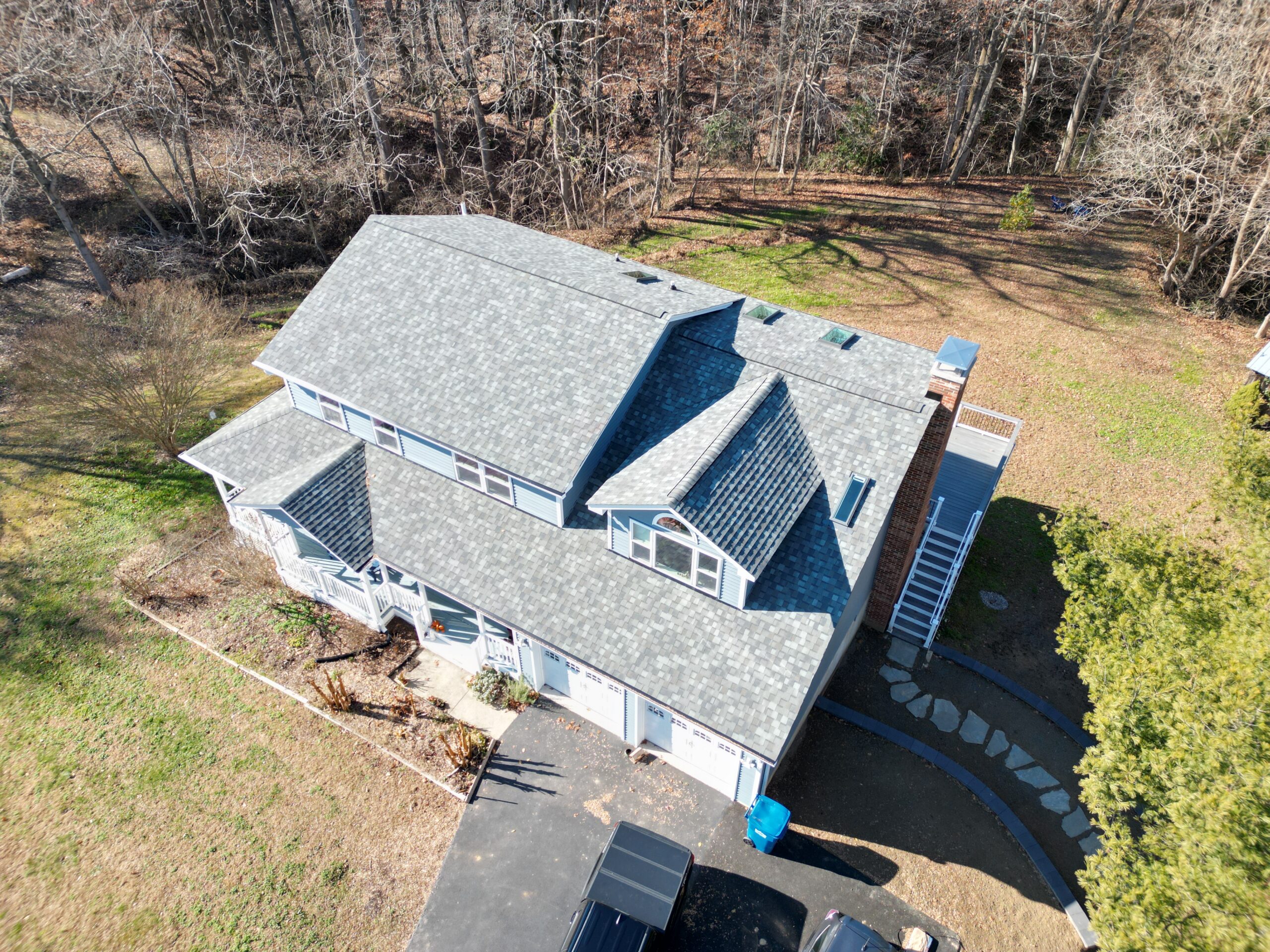
Wondering how often you should replace your roof? Learn the warning signs, material lifespans, and repair-vs-replacement factors for Maryland houses.
How often should you replace your roof?
There is no single number that tells every homeowner exactly when to replace a roof. As a general rule: an asphalt shingle roof in Maryland tends to last somewhere between 15 and 30 years depending on:
- The shingle type
- How it was installed
- Ventilation
- Years of weather exposure
A roof can reach the end of its useful life earlier if it has taken repeated storm damage, or it can hold up longer with routine care and timely repairs.
If you are asking how often you should replace your roof, the more useful question is usually whether the roof is still doing its job.
When to replace your roof
Most residential roofs are replaced once they reach the end of their material’s service life or once damage becomes widespread enough that repeated repairs stop making sense.
Rather than replacing on a fixed schedule, it helps to watch the roof’s condition and have it evaluated when warning signs appear.
The typical ranges below are general industry guidance, and actual service life varies with the specific product, installation, ventilation, and local weather.
| Roofing material | Typical service-life range | Notes |
| 3-tab asphalt shingles | About 15 to 20 years | Most affordable; wears faster under heavy sun and wind exposure |
| Architectural (dimensional) shingles | About 25 to 30 years | Thicker and more durable than 3-tab |
| Standing seam metal | Several decades | Long service life; holds up well to wind and heavy rain |
Warning signs your roof may need attention
Many of these signs can be spotted safely from the ground or from a second-floor window. On-roof inspection should be left to a professional.
Curling, buckling, or missing shingles
Shingles are meant to lie flat. Edges that curl, centers that buckle, or shingles that have blown off all point to aging materials or wind damage. Missing shingles leave the underlayment and decking exposed, which makes leaks more likely with each storm.
A sagging or uneven roofline
A visible dip or sag in the roofline can indicate that the decking or supporting structure has been weakened by moisture. This is one of the more serious signs and should be evaluated promptly rather than left through another season.
Granules collecting in the gutters
Asphalt shingles are coated with protective granules. Some shedding is normal on a new roof, but a heavy buildup of granules in the gutters years later suggests the protective layer is wearing thin and the shingles are aging.
Moss, algae, or dark streaks
Dark streaks are often algae and are mainly cosmetic. Moss is a bigger concern because it holds moisture against the roof surface. A professional cleaning and inspection can help determine whether the shingles underneath are still sound.
Damaged or missing flashing
Flashing seals the areas around chimneys, skylights, vents, and roof penetrations. Cracked, rusted, or missing flashing is one of the most common sources of active leaks, and in many cases this can be repaired without a full replacement.
Recurring leaks or interior water stains
Ceiling stains, damp attic insulation, or a musty smell are signs water is getting in. Because water travels along the path of least resistance, the interior stain may not sit directly below the roof failure. If you have patched leaks in the same roof more than once, the roof may be past the point where repairs are the practical choice. You can learn more about how EPS traces leaks on the roof repair in Southern Maryland page.
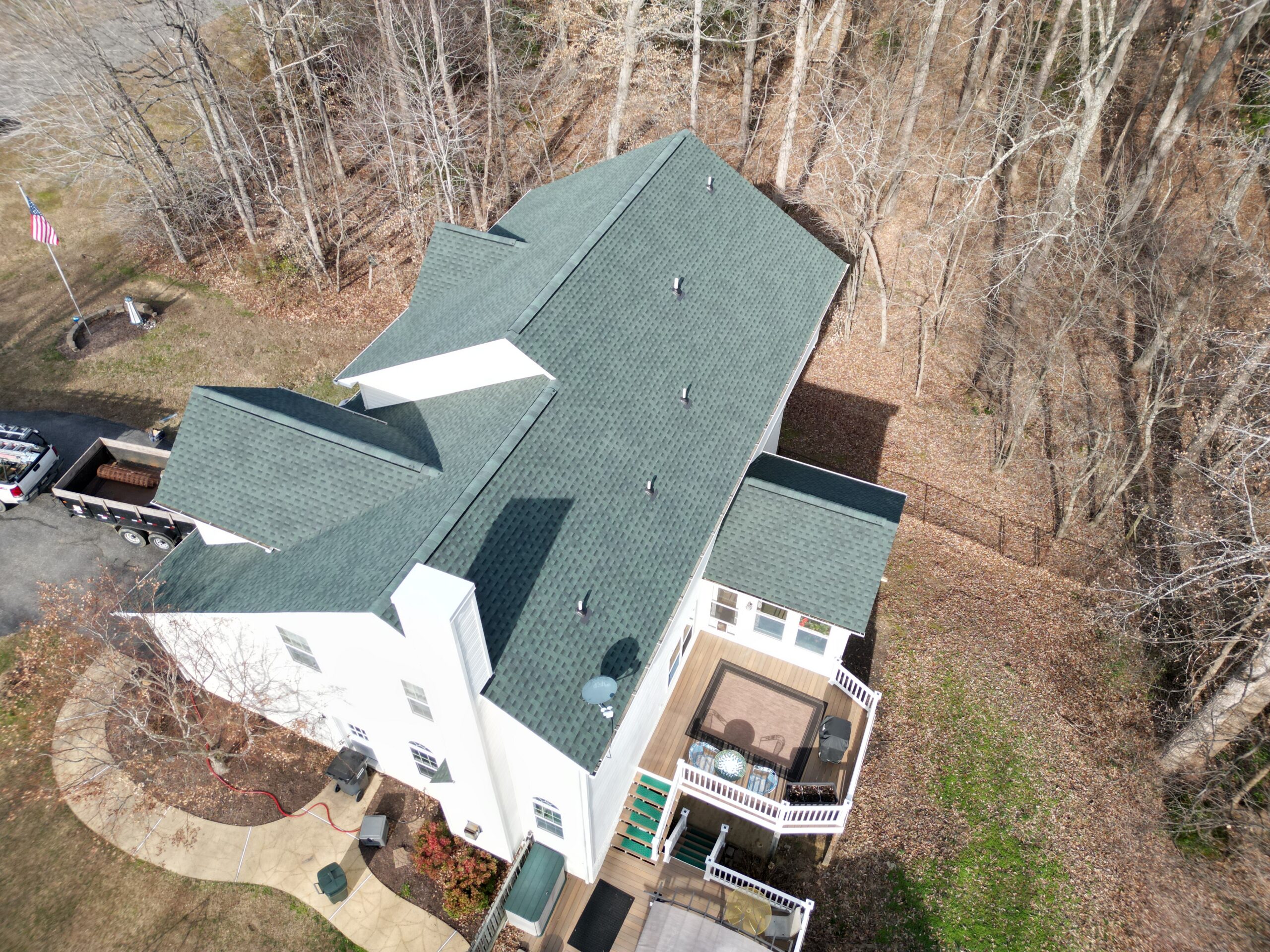
Roof repair or roof replacement?
Localized damage does not automatically require a full roof replacement.
- A roof repair may be reasonable when the damage is limited to a specific area and the surrounding roofing system remains in suitable condition.
- A Roof replacement may be more appropriate when leaks are recurring, deterioration is widespread, or multiple sections of the roof are failing.
The best option depends on the property, and an evaluation can help determine which makes sense for your home.
Factors a roof evaluation typically includes:
- The age and overall condition of the roofing materials
- How localized or widespread the damage is
- The roof’s leak and repair history
- The condition of the decking, flashing, and ventilation
- Whether matching materials are still available for a clean repair
- How long you plan to stay in the home, and your budget
A common rule of thumb homeowners hear is that when a repair would cost a large share of a new roof, replacement often becomes the more sensible investment.
What Maryland’s weather does to a roof
Roofs across Calvert, Anne Arundel, and St. Mary’s Counties deal with humidity, heavy summer thunderstorms, wind-driven rain, and the occasional tropical system moving up the coast.
Repeated wind and rain can loosen shingles and work at flashing over time, and freeze-thaw swings in winter can widen small cracks.
None of this means a particular material is required simply because you live in Maryland, but it does mean a roof here earns a look after major storms, especially if you notice missing shingles or debris afterward.
How can EPS assist you with a roof evaluation
Elite Project Services (EPS) is a family-owned exterior contractor serving Southern Maryland since 2006. Owner Tom Lowe personally handles estimates and stays involved through project coordination.
A typical evaluation follows a clear path:
- Free estimate and evaluation: EPS looks at the visible condition of the roof and the areas that may need repair or replacement.
- Clear recommendations: Tom explains the recommended scope and the available asphalt shingle or metal roofing options before any work is agreed to.
- Professional installation: If replacement is the right call, the crew removes the existing materials, evaluates the visible decking, and installs the approved system.
- Final review and cleanup: EPS reviews the completed work, confirms the area is cleaned, and answers any remaining questions.
If cost timing is a concern, financing is available for qualifying projects. EPS provides service throughout Maryland service areas, including Dunkirk, Owings, and Huntingtown.
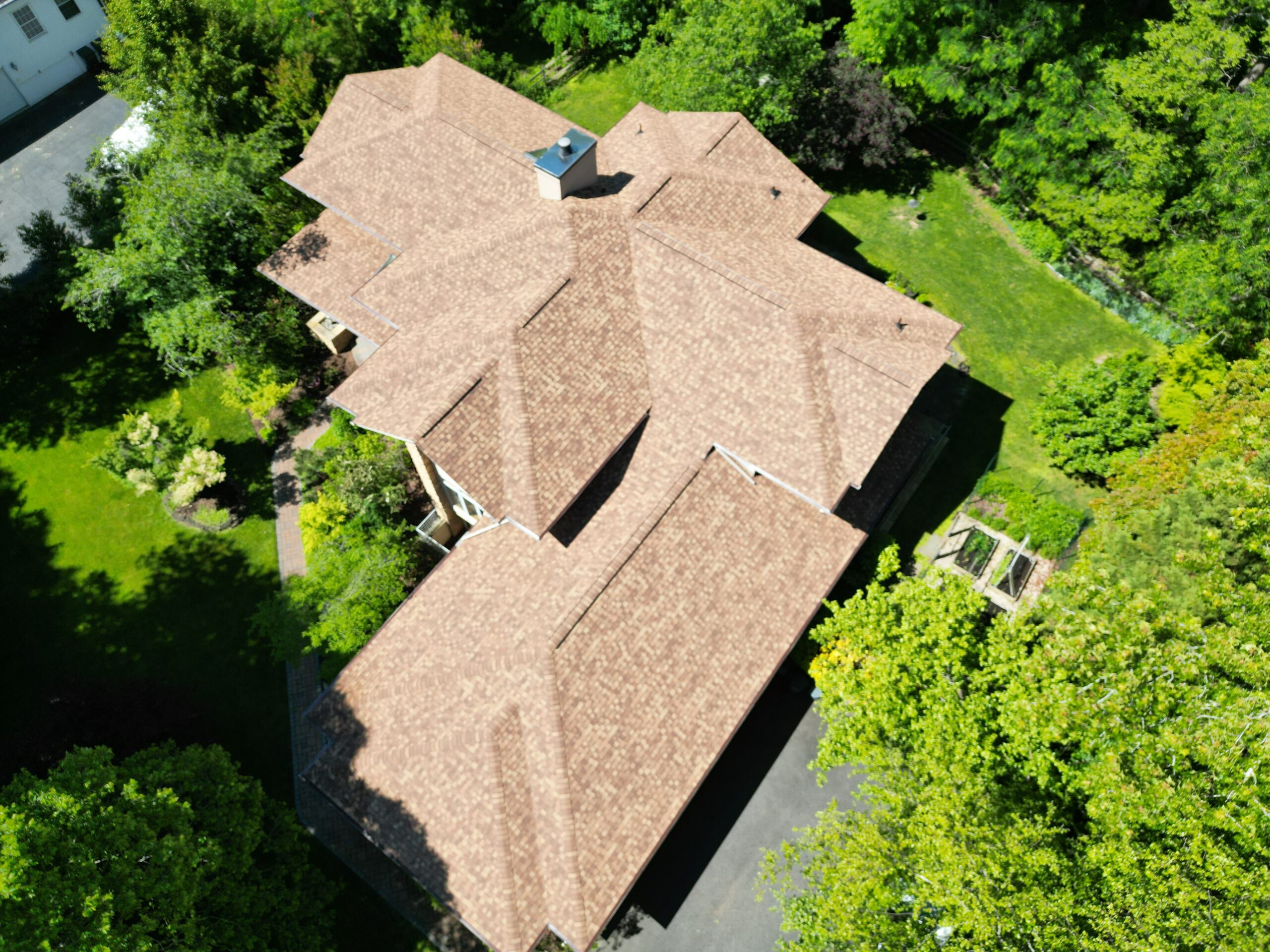
Get an expert to check on your Maryland’s house
Not sure whether you need a roof replacement or a repair?
EPS provides free, no-obligation roof inspections and written estimates across Southern Maryland. Tom will walk the property, explain the findings, and lay out your options. Request a free estimate.
Frequently asked questions about how often should you replace your roof in Maryland
1. Should a 20-year-old roof be replaced?
Not automatically. A 20-year-old asphalt shingle roof is often near the end of a 3-tab shingle’s expected range but may still have life left if it is architectural shingle, was well ventilated, and has no widespread damage. Age is a reason to have the roof inspected, not a reason to replace it on its own. A professional evaluation can tell you whether targeted repairs will hold or whether replacement is the better long-term choice.
2. How long can you go without replacing a roof?
A roof should be replaced when it can no longer reliably keep water out, not by a set deadline. Many asphalt shingle roofs serve 15 to 30 years, and metal roofs considerably longer, but the practical limit is condition. Once you are dealing with recurring leaks, widespread shingle failure, or a sagging roofline, continuing to patch usually costs more over time than replacing. Regular inspections help you avoid being caught by a sudden failure.
3. What is the 25% rule for roofing?
The 25% rule is a general guideline some homeowners use: if roughly a quarter or more of the roof is damaged, or if repair costs approach a large share of a new roof, replacement often becomes the more sensible option. In some jurisdictions there are also code provisions that limit how much of a roof can be repaired or overlaid before a full replacement is required. Treat this as a rule of thumb rather than a firm rule, and confirm any local code question with a professional. EPS can evaluate the visible condition and explain which approach fits your roof.
4. What is the cheapest time of year to get a new roof?
Late fall and winter are often lower-demand periods for roofing, and scheduling can be easier during those months. That said, the biggest drivers of roof replacement cost are the size of the roof, the material selected, the roof slope, removal requirements, and the condition of the decking, not the calendar. Weather also affects scheduling in Southern Maryland, so the practical best time is usually a stretch of mild, dry conditions. The most reliable way to understand your cost is a written estimate based on your specific roof.
5. Does replacing my roof help with an insurance claim?
EPS can inspect visible storm damage, explain the recommended scope, and provide supporting documentation for your records. Whether damage is covered, and whether a claim is approved, is decided by your insurance provider. Direct coverage and policy questions to your insurer or a licensed insurance professional.