
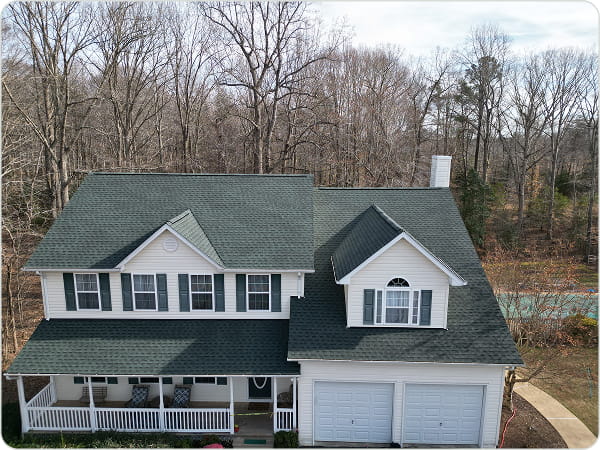
A house exterior winter checklist for Southern Maryland homeowners: what to check on your roofing, siding, gutters, and windows before cold weather.
House Exterior Winter Prep for Maryland Homeowners
Getting a home ready for cold weather comes down to four checks:
- The roof is sealed and shedding water
- The gutters are clear and firmly attached
- The siding is closed against moisture
- The windows are sealed around the frame
Doing those checks in the fall, while temperatures still allow repairs, is far easier than chasing a leak in January.
This house exterior winter guide walks Southern Maryland homeowners through:
- What to look for on each part of the home
- What you can safely check yourself
- When it makes sense to call a contractor
Why winter prep matters for Southern Maryland homes
Southern Maryland winters are milder than winters farther north, but they still wear on a house. Calvert County averages about 36°F through the winter and roughly 19 inches of snow a year.
Temperatures that hover around freezing mean water can freeze and thaw again and again. Each cycle works at small cracks in shingles, caulk joints, and siding seams.
The region also sits in the path of nor’easters. These storms are most frequent and strongest between September and April, bringing heavy rain or snow and gale-force winds. Wind-driven rain is exactly the kind of weather that finds a lifted shingle or an open siding joint.
The good news is that most winter problems start as small, visible issues that cost less to address before the cold sets in.
Your house exterior winter checklist at a glance
| Area | What to check | Why it matters before winter |
| Roofing | Missing, lifted, or cracked shingles; flashing at chimneys, vents, and skylights; overhanging branches | Wind and freeze-thaw cycles can turn a small opening into an active leak |
| Gutters | Leaves and debris; sagging sections; leaking seams; where downspouts discharge | Clogs and poor drainage can send water toward the fascia, siding, and foundation |
| Siding | Cracked, loose, or missing panels; gaps at trim; failed caulk around penetrations | Openings let wind-driven rain and melting snow get behind the wall |
| Windows | Cracked exterior caulk, worn weatherstripping, drafts, fog between panes | Air leaks reduce comfort, and failed seals can point to a unit that needs replacement |
Start with the roof
The roof takes the brunt of winter weather, so it is the logical first step in any house exterior winter plan. You do not need to climb up to learn a lot. Stay on the ground, use binoculars, or look out a second-floor window.
What to look for from the ground
- Missing, lifted, curling, or cracked shingles
- Flashing that looks bent, loose, or separated around chimneys, vents, and skylights
- Granules collecting in the gutters or at downspout outlets
- Tree limbs hanging over or touching the roof
- A dip or sag anywhere along the roofline
- Inside the home: ceiling stains, damp spots, or daylight visible from the attic hatch, if you can look in safely without walking the attic
Roof repair in Maryland
A pre-winter roof inspection can confirm what is actually going on. A localized problem, like a few lifted shingles after a windstorm or failed flashing at a vent, is often a straightforward roof repair in Southern Maryland.
Keep in mind that water can travel under roofing materials before it shows up inside, so a ceiling stain may not sit directly below the spot that is failing. That is why an exterior evaluation matters more than the location of the stain.
Why fall is a better time than winter for roofing work
Timing matters for asphalt shingles. The sealant strip on shingles needs warmth, sun, and temperatures above 40°F to activate, and that shingles lose flexibility and may crack below that point.
Roofing can still be done in cold weather with extra steps, such as hand-sealing the shingles, but fall usually gives a crew more workable days. If your roof is already showing wear across several sections.
Ice dams
Ice dams are less common here than in colder states, but they can form. Heat escaping from the living space melts snow on the upper roof, and the water refreezes at the colder eaves. Even an inch or two of snow followed by several days below freezing can be enough on a poorly insulated, poorly air-sealed attic.
The long-term fixes are attic air sealing, insulation, and ventilation. A roofing evaluation can include a look at roof ventilation, while added attic insulation may call for an insulation contractor. Do not chip at ice on the roof.

Clean and check the gutters
Gutters come next because they decide where all of that roof water goes. Wait until most of the leaves around your home have dropped, then clear them out. Cleaning too early often means doing it twice.
What to check
- Leaves, twigs, and shingle granules packed in the troughs and outlets
- Sections that sag or pull away from the fascia
- Drips at seams and corners during a rain
- Downspouts that empty right next to the foundation, a walkway, or a low spot in the yard
- Soft, stained, or peeling fascia boards behind the gutter line
Cleaning gutters means ladder work. If the roofline is two stories, the ground is uneven, or you are not comfortable on a ladder, leave it to a professional, and never do it when surfaces are wet or icy.
Fixes worth making before the first freeze
Sagging gutters and loose hangers deserve attention before winter, because ice and wet debris add weight to a run that is already struggling. Many of these problems are a simple repair:
- Re-securing hangers
- Resealing a leaking seam
- Replacing a damaged section
When the system has widespread corrosion, recurring leaks, or gutters that overflow in every heavy rain, gutter replacement may be the more practical fix. EPS handles gutter repair and seamless gutter installation, including 5-inch and 6-inch K-style gutters fabricated on-site.
Downspouts matter too
A common guideline is to direct water at least 4 to 6 feet away from the foundation. A downspout extension or rerouted downspout can move runoff away from the house, although it will not solve every grading, drainage, or basement problem on its own.
Gutter guards are worth considering if you have heavy tree cover. They reduce the amount of leaves and larger debris that get into the gutter, which can mean less frequent cleaning, but they still need occasional inspection and maintenance.
Inspect the siding
Siding is the part of the exterior people tend to overlook until something is visibly broken. Walk the full perimeter of the house in daylight and look closely at each wall, including the sides you rarely see.
What to check
- Cracked, warped, buckled, or missing panels
- Loose pieces that move or rattle in the wind
- Gaps where siding meets windows, doors, corners, and trim
- Dried, cracked, or missing caulk around outdoor faucets, vents, dryer exhausts, and utility lines
- Stains, swelling, or soft spots that could point to moisture behind the siding
- Shrubs and vines pressed against the walls, which hold moisture and keep siding from drying out
Why cold weather matters for siding
Vinyl becomes less flexible as temperatures drop, which makes it more likely to crack from an impact, such as ice thrown by a snow blower or a shovel hitting the wall.
Fiber cement and other materials react to cold differently, but any siding can let water in at an open seam or a failed caulk joint, and water that freezes behind the siding can widen the gap.
A small crack or a few loose panels can often be addressed with a targeted repair. If damage covers most of a wall, or concealed rot turns up once panels come off, replacing a larger section may make more sense.
EPS provides siding repair and replacement with vinyl, polymer shake, and fiber cement siding.
Seal and check the windows
Windows are often where homeowners notice winter first, usually as a draft near the sill. A house exterior winter check should include each window from both outside and inside.
What to check
- Exterior caulk around the frame and trim that is cracked, shrinking, or missing
- Weatherstripping on operable sashes that is flattened, torn, or missing
- Drafts you can feel on a windy day
- Sashes that do not lock tightly or close fully
- Soft, rotting, or damaged frames and sills
- Fog or moisture trapped between the panes of glass
Quick sealing jobs vs window replacement
Caulking around window frames and weatherstripping doors are among the simple air-sealing prep steps a house can receive.
Sealing air leaks and adding insulation can save up to 10% on annual energy bills, though actual results depend on the home.
Condensation tells you different things depending on where it forms. Moisture on the inside of the glass usually points to high indoor humidity rather than a failing window. Fog between the panes of a double-pane window means the seal has failed, and humidity control will not clear it.
Failed seals, rotting frames, and sashes that no longer close properly are common reasons homeowners look into window replacement options.
How the roof, gutters, siding, and windows work together
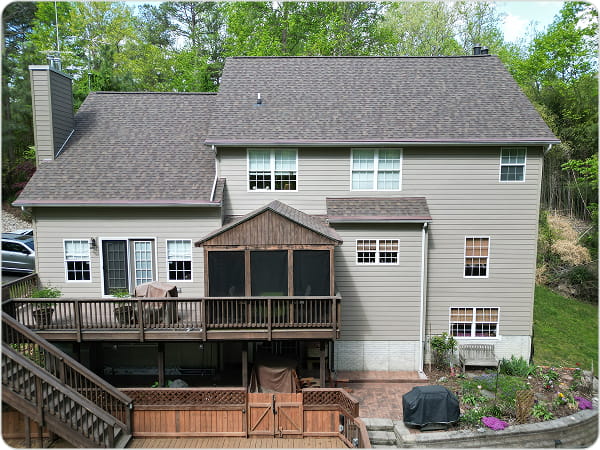
These four systems are connected. The roof sheds water into the gutters, the gutters protect the fascia and siding, and the siding and windows share flashing and trim transitions. A problem in one area often shows up in another.
Overflowing gutters can soak fascia boards and run down the siding. A roof or flashing issue can leave a stain near a window. That is why looking at the whole exterior in one visit can be more useful than chasing each symptom separately, especially on an older home.
When to schedule house exterior winter work
| Timing | What to focus on |
| Early to mid fall | Roofing and siding repairs while temperatures still support sealants and flexible materials |
| Late fall, after leaves drop | Gutter cleaning, downspout checks, and final caulking (check the product label for its minimum application temperature) |
| After a major storm | Look from the ground for missing shingles, wind damage to siding, bent gutters, or debris on the roof, and photograph what you see |
| During winter | Watch for new ceiling stains, drafts, or ice buildup at the eaves, and call a contractor rather than going on the roof |
What you can do yourself and what to leave to a professional
| Safe for most homeowners | Leave to a professional |
| Looking at the roof from the ground or a window | Walking on any roof, especially a wet, icy, or steep one |
| Photographing visible damage from a safe spot | Repairing shingles, flashing, or roof penetrations |
| Clearing ground-level downspout outlets | Second-story gutter cleaning and repairs |
| Checking caulk and weatherstripping you can reach from the ground or inside | Removing siding to check for hidden rot |
| Feeling for drafts and noting which windows fog up | Replacing window units |
| Trimming low shrubs away from the siding | Removing ice from the roof or working near power lines |
How EPS approaches a winter exterior evaluation
Elite Project Services is a family-owned exterior contractor based in Sunderland and serving Southern Maryland since 2006. Owner Tom Lowe personally handles inspections and estimates, so the person assessing your home is the same person standing behind the recommendation. A typical evaluation follows a clear path:
- Free estimate and evaluation: EPS looks at the visible condition of the roofing, gutters, siding, and windows you want checked.
- Clear recommendations: Tom explains what he found and whether a targeted repair or a larger replacement makes more sense, before any work is agreed to.
- Coordinated work: When more than one area needs attention, the roofing, gutter, siding, and window work can be coordinated under one company.
- Final review: EPS reviews the completed work, confirms cleanup, and answers any remaining questions.
If cost timing is a concern, financing is available for qualifying projects. EPS works throughout its Southern Maryland service areas, including Dunkirk, Owings, and Huntingtown.
| Want a second set of eyes on your house exterior winter prep?EPS provides free estimates across Southern Maryland. Tom will walk the property, explain what he sees on the roof, gutters, siding, and windows, and lay out your options with no pressure. Request a free estimate. |
Frequently asked questions about winterizing your house
When should I start house exterior winter prep?
Early to mid fall is the best time to start. Roofing and siding repairs are easier while temperatures still allow sealants to bond and materials to stay flexible. Gutter cleaning works best in late fall, once most leaves have dropped.
What should I check on my roof before winter?
From the ground, look for missing, lifted, or cracked shingles, damaged flashing around chimneys and vents, granules in the gutters, and branches touching the roof. Inside, watch for ceiling stains or damp spots. Do not climb onto the roof yourself; a professional roof inspection can confirm whether a repair is needed.
Should I clean my gutters before winter?
Yes. Clogged gutters can overflow during winter rain and snowmelt, sending water toward the fascia, siding, and foundation. Wait until most nearby leaves have fallen, and make sure downspouts discharge away from the house. If the work requires a tall ladder, hire a professional.
Can roofing work be done in winter?
Often, yes, with extra precautions. GAF recommends installing its shingles at 40°F or above and hand-sealing them in colder conditions because the sealant strips need warmth to activate. Fall usually offers more suitable working days, so it is best to address known problems before winter.
How can I protect my siding in winter?
Repair cracks and loose panels before cold weather, reseal gaps around penetrations, and keep shrubs trimmed back from the walls. Be careful with snow blowers and shovels near the house, since vinyl becomes more brittle in the cold and can crack from impact.
Why do my windows fog up in winter?
Condensation on the inside of the glass usually means indoor humidity is high, which is common in winter. Fog trapped between the panes is different: it means the window’s seal has failed. That kind of fogging cannot be fixed with humidity control and is a common reason to consider window replacement.
Can windows be replaced in the winter?
Window replacement can often be scheduled in colder months, since each opening is typically replaced one at a time. Timing still depends on weather, product lead times, and the scope of the project, so ask about scheduling during your estimate.
How do I prevent ice dams?
Ice dams form when heat escaping into the attic melts snow on the roof and the water refreezes at the eaves. The lasting fixes are attic air sealing, insulation, and ventilation. Avoid chipping ice off the roof, which can injure you and damage the shingles.
Do gutter guards help in winter?
Gutter guards can reduce the leaves and debris that clog gutters, which helps water drain during winter rain and melting snow. They do not eliminate maintenance, though, and still need occasional inspection, especially under heavy tree cover.